














Review for Bleach: Series 7 Part 1 (2 Discs) (UK)
Introduction
I've written sixteen reviews for various iterations of Bleach on DVD, whether it is another instalment of the series, or one of the feature films, and I've never really noted the rather ill advised idea of naming your production after something that you put down a toilet. How many of these reviews have I let pass without using a flushing metaphor, or made mention of some of those unfortunate things left floating in a bowl. Let's face it, Bleach has on occasion been bad, but thankfully, it's never been that bad. This was pointless intro #1472, if you're keeping count.
You'd think that a teenager's life would be complicated enough if he could speak to ghosts. But that was only the beginning for Ichigo Kurosaki. When he literally bumped into a Shinigami named Rukia Kuchiki, he was introduced to a whole new world. The Shinigami's mission is to guide forlorn spirits known as Wholes to the Soul Society, and protect them and the living from Hollows, perverted spirits that have become monsters that prey on other souls, living or dead. They are not supposed to let the living know about this supernatural world, but not only does Ichigo see Rukia, circumstances force her to give him her powers, and train him to be a Shinigami while she regains her strength. Through their adventures, Ichigo learns that his classmates Orihime and Chad are similarly bestowed with spiritual abilities. He also meets Uryu Ishida, the last Quincy, heir to a tribe of spiritual warriors from the human world that once sought out and destroyed Hollows, before the Shinigami in turn eradicated them for disrupting the balance.
Previously on Bleach, Ichigo and his friends had returned from the Soul Society, and were trying to rebuild their lives in the real world. Except that Ichigo is now pretty much a full time Soul Reaper and has to leave his mortal body in the less than capable hands of Kon from time to time, to go off and defeat a few Hollows. His friends too have their own newly acquired spiritual abilities to deal with, and an assumed responsibility to develop them to protect the world. All except Uryu Ishida who had lost his Quincy abilities. But then Captain Sosuke Aizen, who had betrayed the Soul Society and fled with his conspirators at the end of the Soul Society Arc, decided to put his plan into effect…
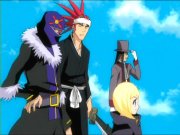
He starts by taking the strongest Hollows, indeed the strongest of the Menos Grande, and begins removing their masks, and equipping them with the Zanpakuto swords and abilities of the Soul Reapers. These are the Arrancars, and they soon come to the living world to wreak havoc. At the same time, it turns out that there is an outlaw group of Soul Reapers, shinigami that have embraced their Hollow natures and strengths, have donned the masks of Hollows and have called themselves Visoreds. They've come to the living world to recruit Ichigo, who's been having trouble controlling his Hollow half. Coincidentally, Uryu Ishida's father has appeared, offering him the chance to regain his Quincy abilities, with the proviso that he disassociates himself with Ichigo and the Soul Reapers.
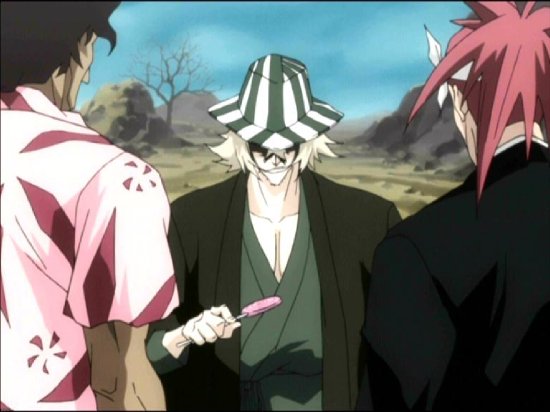
As we left Season 6, the Arrancar threat was increasing, so Ichigo was in full time training with the Visoreds, Uryu was also in training, and the majority of the Soul Reapers were now in the Living World, trying to protect Karakura City from the threat that Aizen and his allies pose. And we had just entered a 10-episode stretch of filler that took us away from all that. Four episodes out of the way, means that we have six episodes of filler to wade through before we get back to the main storyline. That's more than half of the ten episodes in Bleach Season 7 Part 1, presented here by Manga Entertainment across 2 discs.
Picture
From Season 6 onwards, Bleach went native PAL. It's a more common sight in anime mastered in Australia now, and gone are the days of ghosting, judder, lower resolution and conversion artefacts, and in comes a 4% PAL speed up. The image is clear enough, the colours strong and vibrant, and the picture is as sharp as you would expect. It's a fun, colourful animation, heavy on the primary colours, and the character and world designs have universal appeal. I must say that in this sixth series, the character designs are showing a greater degree of inconsistency, which is a tad disappointing. Given that it is a long running show, you wouldn't expect a great deal of detail and frippery, but though the animation is simple, it's also very dynamic, especially in the action sequences. Bleach looks really splendid now, all except the end credit text scroll, which didn't survive the transfer to PAL as well as the animation did.
Sound
You get a choice of DD 2.0 English or Japanese with a sole translated subtitle track to accompany them. The dialogue is clear, the show has some nice music, and it is all presented as vibrantly and competently as you would expect from stereo soundtracks. I've also noticed that while there is only the single subtitle track, the on screen text continues to be translated, which is an improvement over the first season.
Extras
Static menus and a jacket picture for when the disc isn't spinning. Each episode ends in an Illustrated Guide to Soul Reapers Golden comedy sketch. The only extras are on Disc 2. This has a textless closing sequence, and 30 line-art images in a gallery, as well as trailers for the Bleach the Series, Bleach the Movie 1: Memories of Nobody, and Bleach the Movie 2: Diamond Dust Rebellion and the Bleach videogame.
Conclusion
To be honest, that four episode stretch of filler that topped off the end of Season 6 Part 2 did put a little fear into me, as that banal little tale of a pair of sibling souls being pursued by a multi-cloned Arrancar reminded me strongly of the tedium of the Bount arc. It was dull, disappointing, and an unwelcome diversion from the delicious meat of the Arrancar arc. That Season 7 Part 1 promised to kick off with six more episodes of filler did much to dampen my rediscovered enthusiasm for Bleach, the most fun I've had with this show since the first season. I needn't have worried, as the filler episodes that kick of this seventh season have nothing to do with the four that preceded it, and are even entertaining and funny. That they are filler cannot be denied, and how you react to filler episodes may make them feel like a distraction from the actual story, but they needn't be dismissed out of hand.
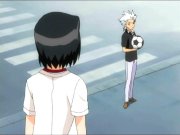
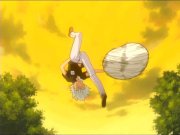
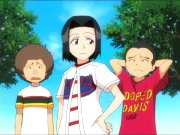
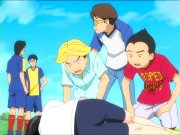
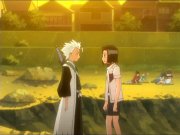
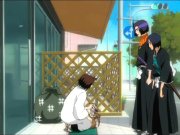
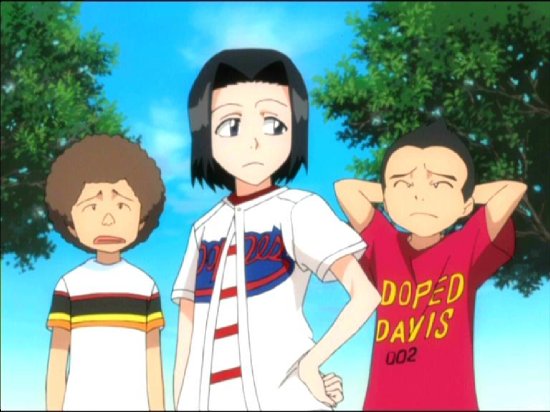
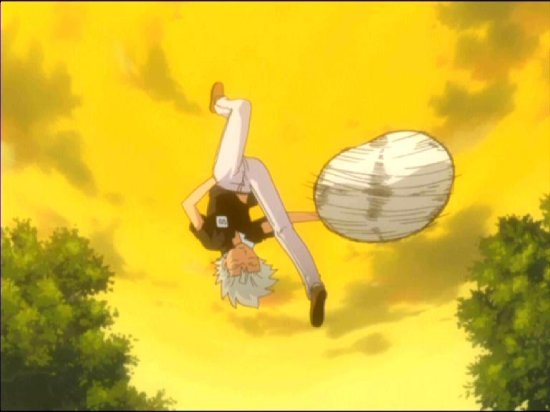
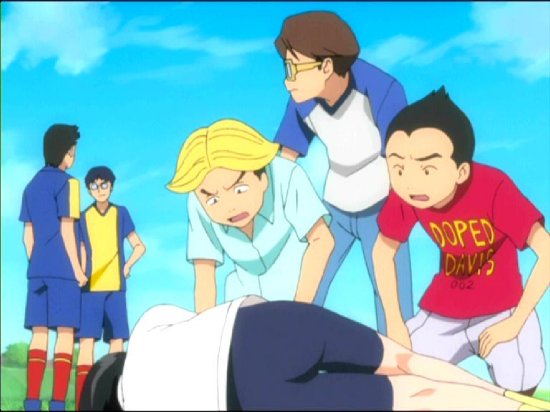
The first four episodes are standalone stories, with the conceit that with all of the main characters in training, with the Arrancar threat looming, it's down to the Soul Reapers who are now in the Living World to protect it while Ichigo and his friends power up. These four episodes follow these Soul Reapers as they get used to living in the real world, and have some fun with the characters. In the first of these episodes, Toshiro Hitsugaya is the focus, when he runs unknowingly into Karin, Ichigo's little sister. She and her school friends are having trouble with a group of older kids over who gets to play football on a local field. Naturally it boils down to a football game. Seeing that Hitsugaya looks like a grade school kid, Karin tries to get him to join the team. This is a rather sweet and fun episode, funny at times, but melancholy and reflective at others.
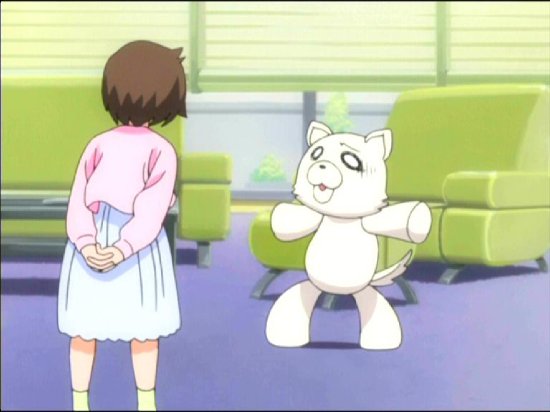
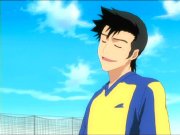
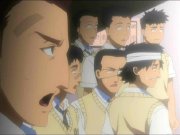
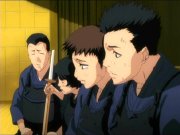
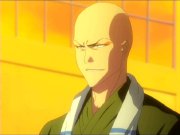
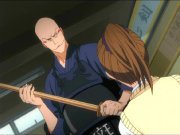
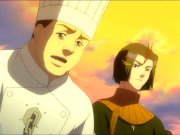
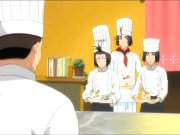
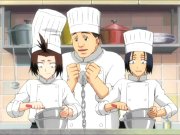
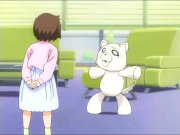
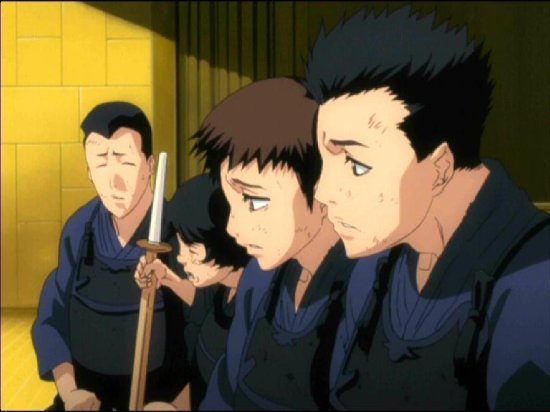
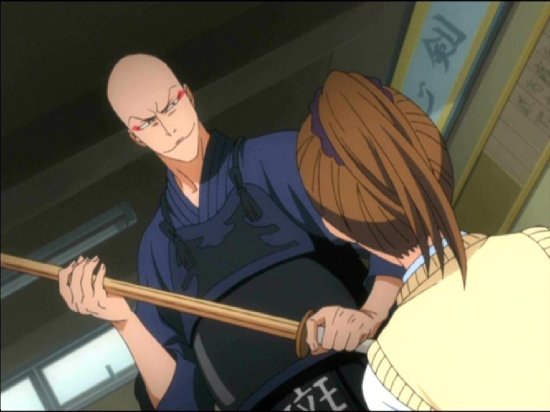
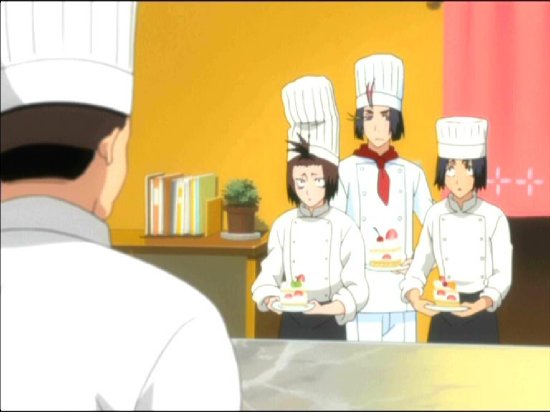
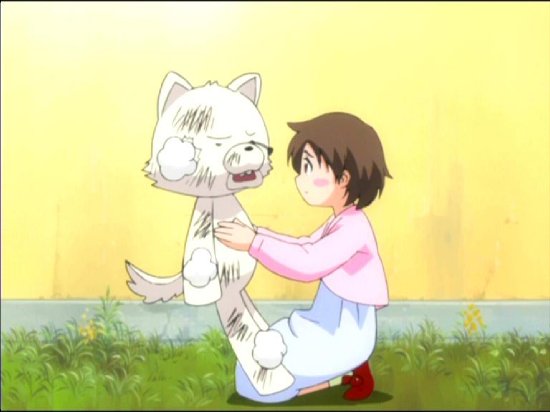
It looks like the next episode is a simple rehash, with kendo taking the place of football when a rival team ambushes the Karakura High School kendo team. The school student president, who is currently hosting soul reapers Ikkaku and Yumichika, and is currently in lust with Ikkaku, enlists him to train up the surviving first year kendo club members for a revenge match. The emphasis here is purely on comedy though. Next up is the tale of a soul bound to a cake shop, a prematurely killed chef whose last wish before crossing over is to get his mother to taste one of his cakes. When Soul Reaper researcher Rin Tsuhokura gets assigned to the Living World to research Arrancars with Hanataro Yamada, his sweet tooth persuades him to help the chef fulfil his final wish. The last of the standalone episodes sees the bear bound mod soul Kon helping a lonely little girl who has no friends, whose hard working mother has divorced her father, and now leaves her at home during the day. She makes her first friend when Kon ends up in her teddy bear Shintaro by mistake.
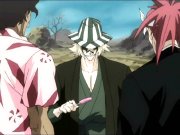
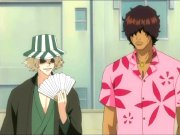
The next two-episode story doesn't feel like filler, and certainly has elements to it that pertain to the overall arc. But it does stand alone from the main story. It is useful in that it reminds us of all that is happening in the Arrancar Arc, with Aizen and his conspirators plotting and scheming in Hueco Mundo, and converting Hollows into Arrancars using the Hogyoku that he stole from the Soul Society. It also reminds us of the time limit that the heroes have, that the Arrancar plan will come to fruition when the Hogyoku fully awakens, and that they have a matter of months to train up and get ready for the final battle. What this mini-story does is introduce an Arrancar character named Patras, who with his allies isn't at all pleased at the thought of a former Soul Reaper dictating and commanding Hollows become Arrancars. His plan is to steal the Hogyoku for himself, go to the living world, and force the one who created it, Kiseke Uruhara, to tell him how to use it, and thus take its power for himself. As a story, it's a pretty run of the mill good guys versus bad guys confrontation, but it does have the saving grace of quickly getting the audience up to speed with the whole Arrancar arc story, putting the key players and events into context. It also has the foreshadowing of establishing Aizen's interest in Orihime Inoue, an interest that plays out in the final four episodes on this collection when the manga arc resumes.

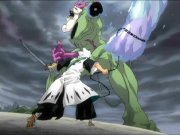
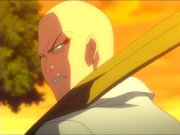
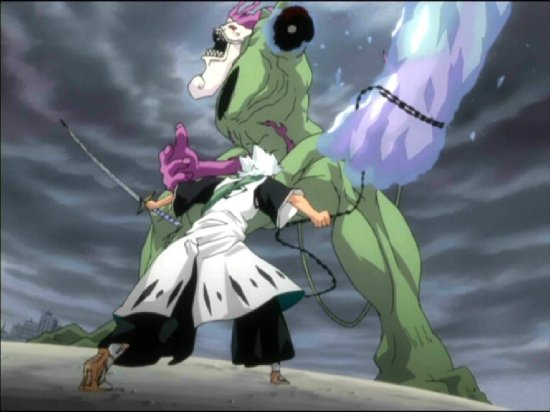
Orihime's unique powers, her abilities to heal, to defend and attack using the little spirits in her hair clips, has caught the interest of Aizen, and he puts into motion the next stage of his plan. Months before they were expected, the Arrancars return to the living world, the newly created Wonderweiss Margera, the new number 6, Luppi, and Yammy, as well as the shamed former number 6, Grimmjow. The Soul Reapers aren't ready, Ichigo has barely begun his training with the Visoreds, Rukia and Orihime are in the Soul Society training, Chad is training with Renji beneath Uruhara's shop, they simply aren't prepared. Rangiku, Hitsugaya, Ikkaku and Yumichika face the Espada Arrancars, while Ichigo interrupts his training for a rematch against Grimmjow, even though he can only hold his Visored form for 11 seconds. They are hopelessly outmatched, and need reinforcements. Rukia races back to help, but Orihime has to wait until the Seireimon is stabilised. It's just the opportunity that the Arrancar Ulquiorra has been waiting for. For the Arrancar attack is just a diversion. The true target of the mission is Orihime.
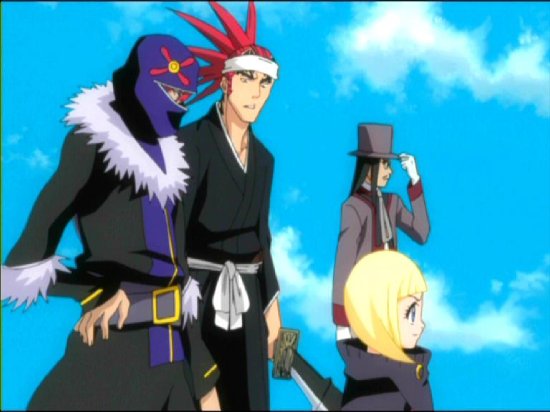
It wasn't as bad as I expected. Actually I liked all but one of the filler episodes. The cake shop episode missing the target by a fair way and dragging its twenty minutes into something that felt a lot longer. But the other standalone episodes were a lot of fun, ranging from the comedic to the sugar sweet, and all were entertaining. The Patras rebellion that lasted two episodes was a little formulaic, but as a reminder of all the key points of Bleach at this point in the run, it's almost indispensable. And when the manga story itself resumes, we hit a major point of the story at full pace, with a gripping quartet of episodes, with action and excitement, topped off with a character based emotional episode as well. It's a hell of a cliffhanger that invites the next part of Bleach as quickly as possible. Fortunately, Manga are releasing Season 7 Part 2 less than a month after Part 1.
Your Opinions and Comments
Be the first to post a comment!