




















Review for Bleach: Series 7 Part 2 (2 Discs) (UK)
Introduction
That was fast! Normally we have to wait interminably long for subsequent instalments of shonen anime such as Bleach and Naruto, especially in these financially straitened times. Distributors want to keep apace with their fanbase's ability to buy the product, as well as avoiding overstretching their resources, and with Viz at the head of the English language region release chain, when they slow down, everyone else has to as well. But the second half of season 7 of Bleach follows hot on the heels of the first part, so close in time actually that I haven't even forgotten what happened in the previous collection. Normally I have to re-read my old review, and stick in the final episodes of the previous set just to refresh my memory. This can only be a good thing, although it seems that there is no Season 8 yet in Manga's schedules, at least not in the remainder of 2011.
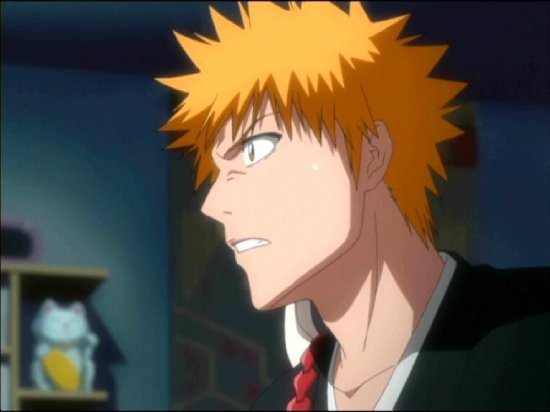
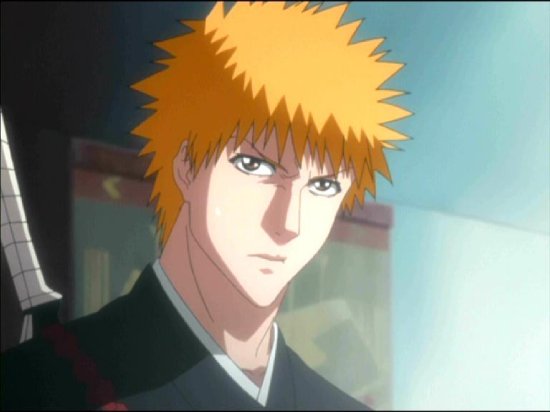
You'd think that a teenager's life would be complicated enough if he could speak to ghosts. But that was only the beginning for Ichigo Kurosaki. When he literally bumped into a Shinigami named Rukia Kuchiki, he was introduced to a whole new world. The Shinigami's mission is to guide forlorn spirits known as Wholes to the Soul Society, and protect them and the living from Hollows, perverted spirits that have become monsters that prey on other souls, living or dead. They are not supposed to let the living know about this supernatural world, but not only does Ichigo see Rukia, circumstances force her to give him her powers, and train him to be a Shinigami while she regains her strength. Through their adventures, Ichigo learns that his classmates Orihime and Chad are similarly bestowed with spiritual abilities. He also meets Uryu Ishida, the last Quincy, heir to a tribe of spiritual warriors from the human world that once sought out and destroyed Hollows, before the Shinigami in turn eradicated them for disrupting the balance.
Previously on Bleach, Ichigo and his friends had returned from the Soul Society, and were trying to rebuild their lives in the real world. Except that Ichigo is now pretty much a full time Soul Reaper and has to leave his mortal body in the less than capable hands of Kon from time to time, to go off and defeat a few Hollows. His friends too have their own newly acquired spiritual abilities to deal with, and an assumed responsibility to develop them to protect the world. All except Uryu Ishida who had lost his Quincy abilities. But then Captain Sosuke Aizen, who had betrayed the Soul Society and fled with his conspirators at the end of the Soul Society Arc, decided to put his plan into effect…
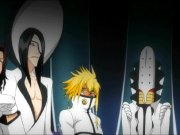
He starts by taking the strongest Hollows, indeed the strongest of the Menos Grande, and begins removing their masks, and equipping them with the Zanpakuto swords and abilities of the Soul Reapers. These are the Arrancars, and they soon come to the living world to wreak havoc. At the same time, it turns out that there is an outlaw group of Soul Reapers, shinigami that have embraced their Hollow natures and strengths, have donned the masks of Hollows and have called themselves Visoreds. They've come to the living world to recruit Ichigo, who's been having trouble controlling his Hollow half. Coincidentally, Uryu Ishida's father has appeared, offering him the chance to regain his Quincy abilities, with the proviso that he disassociates himself with Ichigo and the Soul Reapers.
As we left Season 6, the Arrancar threat was increasing, so Ichigo was in full time training with the Visoreds, Uryu was also in training, and the majority of the Soul Reapers were now in the Living World, trying to protect Karakura City from the threat that Aizen and his allies pose. With a ten-episode stretch of filler out of the way, it was time to get back to the main storyline, and rather than waiting for the winter deadline, Aizen pushed matters ahead, by sending a squad of elite Arrancars to the living world to face off against the Soul Reapers. But that was just a feint, his true target was Orihime Inoue, and as we begin Season 7 Part 2, Ichigo and his friends have to deal with the aftermath of her disappearance, while she faces Aizen and the Arrancars alone in Hueco Mundo. Manga Entertainment presents the next ten episodes, 142-151 of Bleach across two discs.
Picture
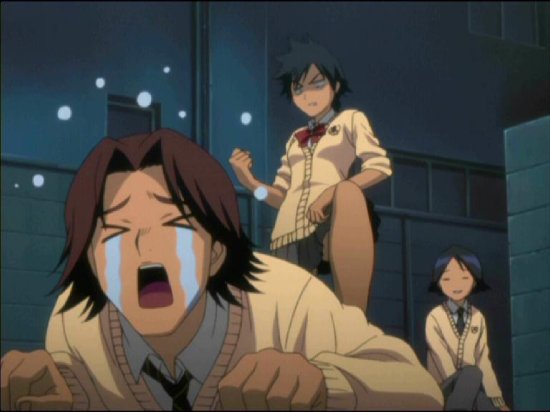
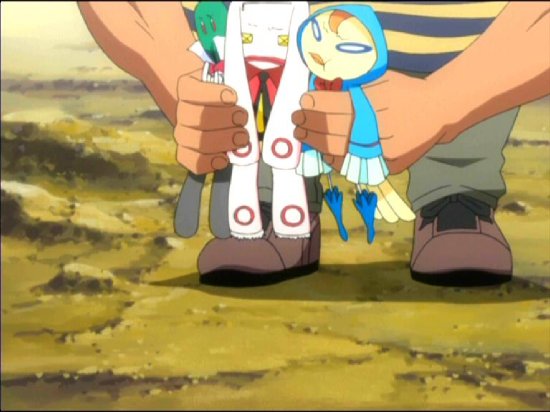
From Season 6 onwards, Bleach went native PAL. It's a more common sight in anime mastered in Australia now, and gone are the days of ghosting, judder, lower resolution and conversion artefacts, and in comes a 4% PAL speed up. The image is clear enough, the colours strong and vibrant, and the picture is as sharp as you would expect. It's a fun, colourful animation, heavy on the primary colours, and the character and world designs have universal appeal. I must say that in this sixth series, the character designs are showing a greater degree of inconsistency, which is a tad disappointing. Given that it is a long running show, you wouldn't expect a great deal of detail and frippery, but though the animation is simple, it's also very dynamic, especially in the action sequences. Bleach looks really splendid now, all except the end credit text scroll, which didn't survive the transfer to PAL as well as the animation did.
Sound
You get a choice of DD 2.0 English or Japanese with a sole translated subtitle track to accompany them. The dialogue is clear, the show has some nice music, and it is all presented as vibrantly and competently as you would expect from stereo soundtracks. I've also noticed that while there is only the single subtitle track, the on screen text continues to be translated, which is an improvement over the first season.
Extras
Static menus and a jacket picture for when the disc isn't spinning. Each episode ends in an Illustrated Guide to Soul Reapers Golden comedy sketch. The only extras are on Disc 2. This has a 2 textless closing sequences, and 25 line-art images in a gallery, as well as trailers for the Bleach the Series, Bleach the Movie 1: Memories of Nobody, and Bleach the Movie 2: Diamond Dust Rebellion and the Bleach videogame.
Conclusion
I feel like I have been waiting for this volume for years. Ever since the first season of Bleach established the show with such impact and style, setting forth a very interesting premise, an engaging story, with enjoyable and likeable characters, I have been waiting patiently for Bleach to live up to that initial promise. It's been a long wait, as the first, Soul Society arc, while it might have been adapted from the manga, really overdosed on the shonen stereotypes, the multi-episode long fights, the arcane and extensive show-specific jargon and terminology, and sheer character overload. It felt like hundreds of new characters had been crammed into the narrative, and at this point, all these years later, I still haven't the faintest idea who half of them are. Then came the interminable filler of the Bount arc, two seasons worth, before we got back to the canon storyline in the start of the Arrancar arc in Season 6.
What I liked best about Bleach initially was that the fantastic soul reaping was happening in the background of the real world, giving the story a very interesting balance. Season 6 finally brought us back to that real world setting, and the show picked up as a result. The only thing dragging it down was some more of that filler, fortunately this time in small doses. I must admit that I did get concerned at the start of this second part of Season 7 though, as it quickly became apparent that the heroes were going to depart the Living World once more, and take us to somewhere where the unreal and fantastic is commonplace, thus diluting the existing fantasy elements. I needn't have worried. Season 7 Part 2 is the best instalment of Bleach yet, and finally, I get to see the show live up to, and exceed the promise of the first season. I loved every minute of these 10 episodes, where character, action and comedy came together in a perfect storm of anime.
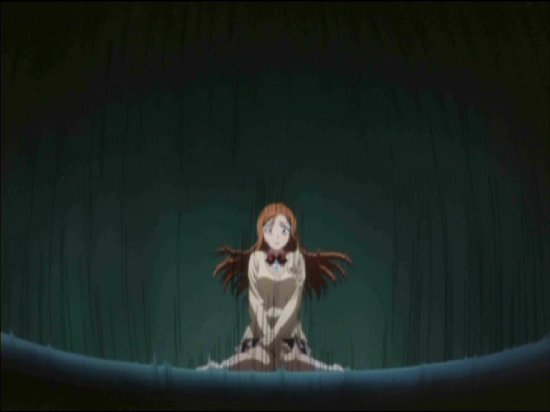
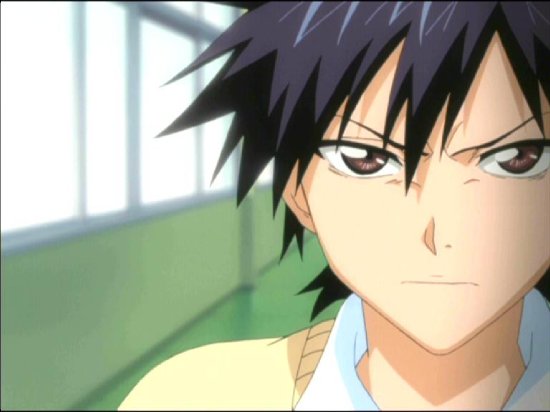
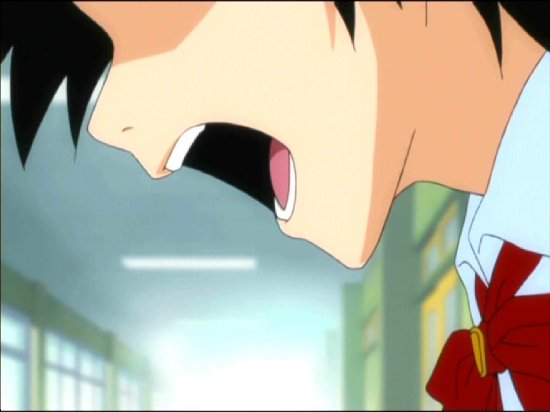
When last we left Bleach, the Arrancar Ulquiorra had just confronted Orihime, and he had blackmailed her into joining Aizen and the Arrancars in Hueco Mundo. He'd threatened her friends, at the time fighting for their lives against an Arrancar attack, and she had no choice but to agree. At the start of Season 7 Part 2, Ichigo and the others realise that she has disappeared, and they have to find out just where she is. That causes friction when Tatsuki confronts Ichigo and demands to know the truth, revealing that she already knows of Ichigo's other life as a Soul Reaper. Ichigo refuses to let her into his world though, deciding to find Orihime himself.
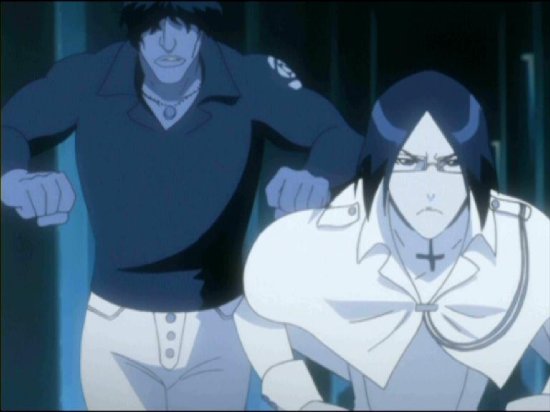
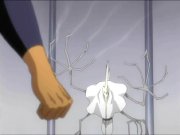
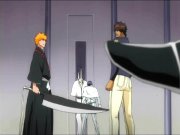
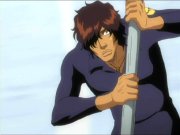
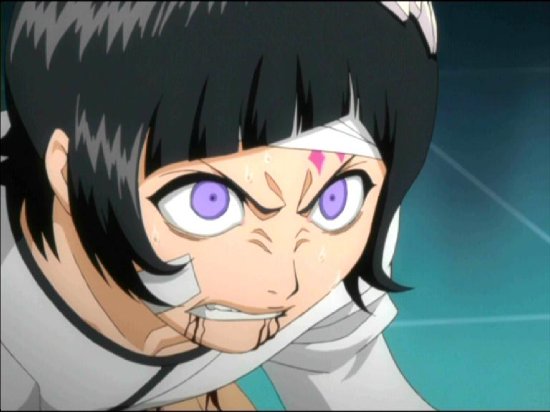
That's where it gets complicated, as Orihime's disappearance is suspicious to say the least, given that she was blackmailed into leaving, and even given the opportunity to say goodbye. It looks to all as if she left of her own volition. Which is why the Soul Society marks her as a traitor and orders the Soul Reapers not to pursue her. In fact they order all the Soul Reapers back to the Soul Society to prepare for Aizen's attack. That essentially leaves Ichigo alone to find and rescue Orihime. He goes to Uruhara to find a way into Hueco Mundo, the realm of the Hollows, now reigned over by Aizen and the Arrancars. What he finds is that he isn't alone in wanting to rescue Orihime, that Chad and Ishida are there as well. Chad has powered up his fist, while Ishida has regained and even improved his Quincy abilities. When they get to Hueco Mundo, they find that Rukia and Renji have followed them, and as they violently remind Ichigo, their loyalty to their friends also outweighs their duty to the Soul Society.
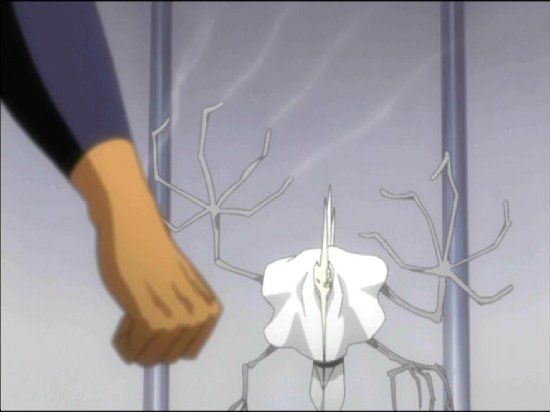
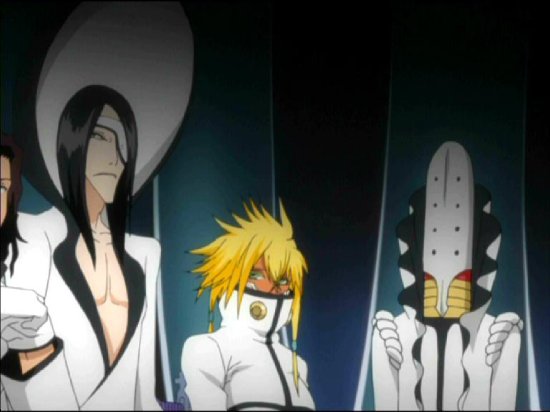
The advantage of this set up is that the character overload of the Soul Society arc is avoided. We have our five main characters, Ichigo, Chad, Ishida, Rukia and Renji exploring Hueco Mundo, and looking to rescue the sixth main character, Orihime. While we get glimpses of the Espada, the Arrancars and the occasional asides to Aizen posed languorously and moodily on his throne, we don't get overwhelmed by the structure of Hueco Mundo, we don't get an overdose of Hollow jargon. Instead we get to partake of it at a pace that is easy to keep up with.
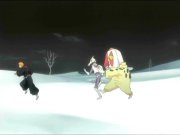
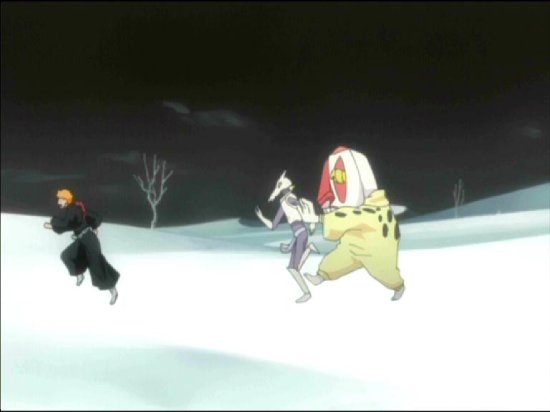
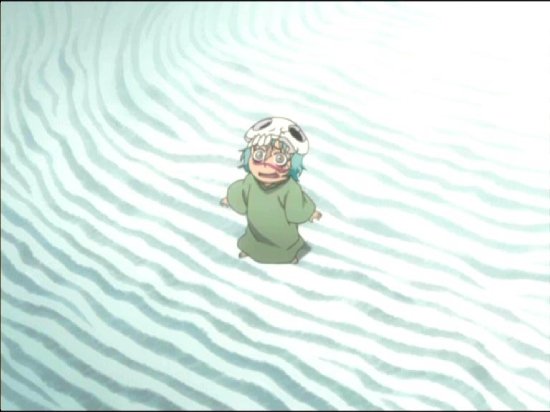
The best thing about this stretch of ten episodes is the comedy. It's been a while since the writing in Bleach has been as sharp as this, and a lot of it is down to the combination of characters. Ichigo and Ishida have always had an antagonistic respect for each other, while Chad's dry asides have been worth watching. Rukia's brand of comedy has been absurd at the minimum, but it's when these characters mesh together that it all really begins to shine. Just watching Ishida espouse preparedness, wariness and discipline before entering any dangerous situation, just to see everyone else blunder forward regardless makes me burst out laughing each time. Early on in their quest to save Orihime, we learn that there are some cute Hollows, and an adorable Arrancar, when Ichigo runs into Nel Tu and her brothers. Nel's a little cute faced childlike Arrancar (apparently one of Aizen's failures), and when we meet her, she's fleeing from a couple of silly looking Hollows. Ichigo seeing a child in distress races to the rescue, only to learn that Nel and her brothers have been playing Eternal Tag. There isn't much else to do in the endless wasteland of Hueco Mundo.
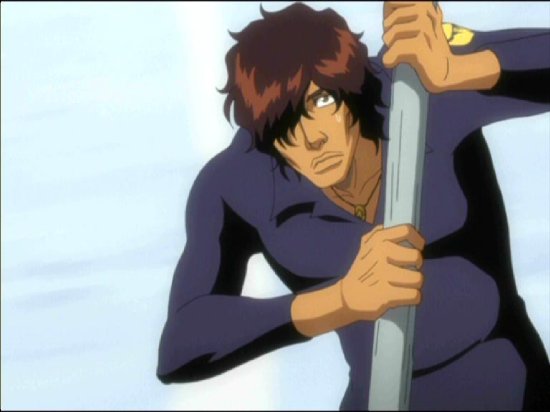
Nel is a delightful little childlike creation, a masochistic Arrancar that likes to be chased and pursued until she cries. As she often reminds herself, her brothers, and their pet giant snake thing Bawabawa, they and the Soul Reapers are natural enemies, and that antagonism carries through to dealing with Ichigo and his friends. But as they face adversity together, they become fond of each other, and Nel even helps Ichigo get to Las Noches, Aizen's fortress, and where Orihime is being kept. On the way they fall into the Forest of Menos, where Menos Grande wander in herds, and where even Ichigo and his friends are overwhelmed. But they do meet an interesting character there, a solemn and enigmatic Soul Reaper in a Hollow Mask named Ashido. Ashido and his squad pursued some Hollows back to Hueco Mundo centuries previously, and knowing that his mission is to defeat Hollows, Ashido has stayed there to fight ever since.
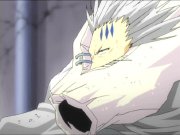
As we conclude the set, the heroes finally reach Las Noches and break in, only to be faced with five paths to choose from. They pick a path each, and despite Ichigo's desire to protect Nel, she follows him in. They come face to face with a comical pirate looking Arrancar named Dordoni, who looks to be a clumsy pushover, but as the disc comes to a close, it becomes clear that he's a whole lot more dangerous than Ichigo has assumed. All this while, Aizen and the Arrancars have been playing mind games with Orihime, sowing little seeds of tension between her and her potential rescuers, and also giving her the hope that by staying with Aizen, she may be able to do something to stop him herself. When and if Ichigo and the others reach her, it may not be the relieved reunion that they are hoping for.
I loved this selection of Bleach episodes, it's been everything that I have been hoping for since the first season, and I'm still in two minds over whether the wait has been worth it. Still, Season 7 Part 2 of Bleach is here now, and it's well worth taking the time to appreciate it. Hopefully subsequent volumes will only build further on this.
Your Opinions and Comments
Be the first to post a comment!