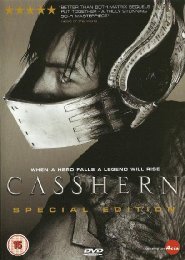














Casshern: Special Edition
Introduction
Casshern may not mean too much to the average man in the street, especially in the UK, but he's definitely an item of pop culture in Japan, up there with any of the Marvel Comic characters. The creator, Tatsuo Yoshida isn't a name that will ring too many bells here either, but he's the man who also created Speed Racer, and Gatchaman, better known in the West as Battle of the Planets. So you can see why Casshern was ripe for a live action adaptation back in 2004, over 30 years after he first appeared in anime form. 2004 was also the year of the digital back lot, that brief flirtation with egregious CGI used in filmmaking that was thankfully short-lived. The US gave us Revenge of the Sith, Sin City, and Sky Captain and the World of Tomorrow, and Europe gave us Immortel. Stand your actors in front of a green screen, give them a rough idea of what they are supposed to do, and then colour in the backgrounds afterwards, and audiences can marvel at characters that don't interact with anything. It's a useful filmmaking tool, but you really shouldn't make a whole movie that way. But no one knew that back in 2004, which is why Japan gave us Casshern, essentially real life actors inserted into a 3D anime.
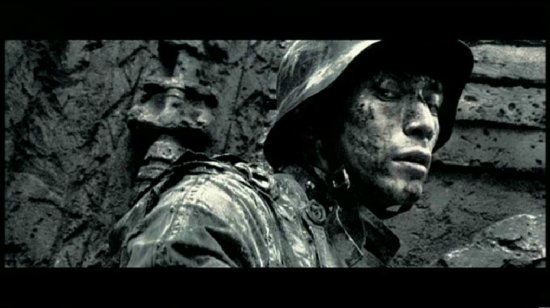
In the future, following a protracted and devastating war between East and West, peace finally reigns when the Eastern Federation wins. But this is no glorious peace, for the war has wrought havoc on the world, pollution and decay now permeates everything, and far from ending the fighting, now the government has to face terrorism as well. Humanity is tired, dispirited, and dying, for the pollution takes its toll, and mutations weaken the gene pool. One man has hope, Dr Azuma's neo-cell treatment offers life instead of death, and he hopes to heal his stricken wife when the technology is developed. As so often happens, the only faction willing to support his work is the military. He has his own problems when his son Tetsuya refuses to follow him into medicine, and instead joins the military to make his mark, before coming back to marry his childhood sweetheart Luna. But tragedy strikes when Tetsuya is killed. Worse, Dr Azuma's experiments go horribly wrong, creating a new life form, the Neoroids, who are intent on exterminating their creators, and who kidnap Azuma's wife. His only hope is to use the neo-cell treatment to resurrect his fallen son, and transform him into the hero Casshern.
Picture
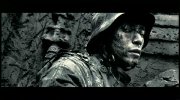
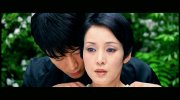
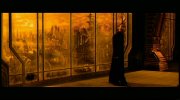
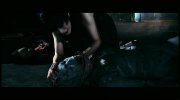
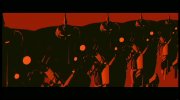
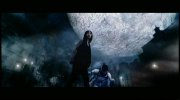
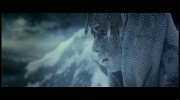
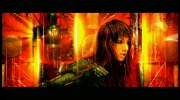
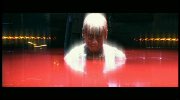
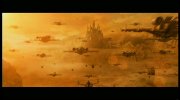
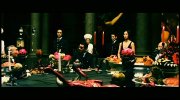
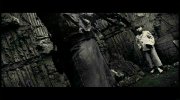
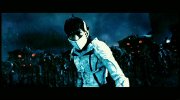
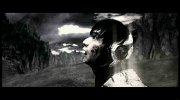
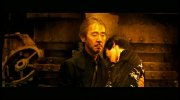
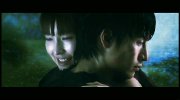
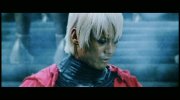
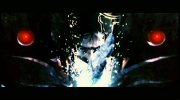
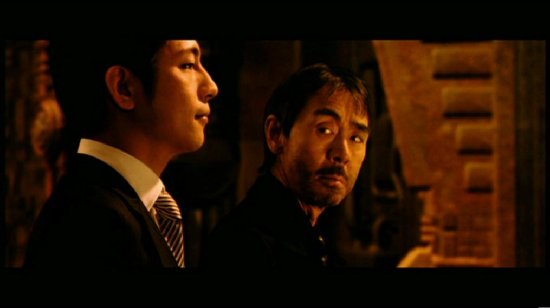
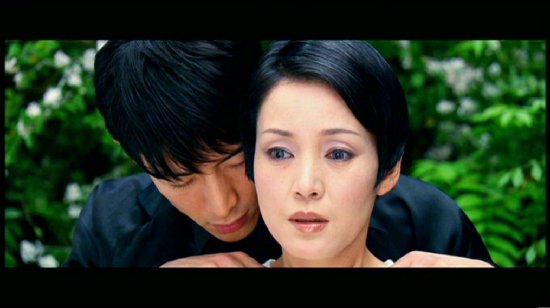
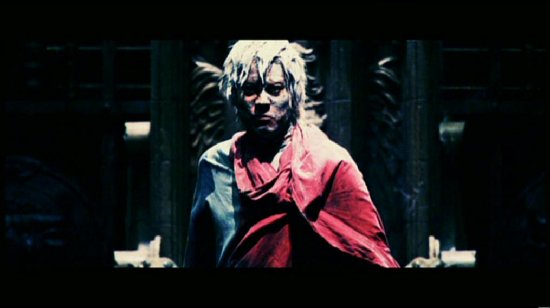
Momentum Asia gives us Casshern's 2.35:1 picture in the anamorphic format, although it is one of those pesky NTSC-PAL standards conversions. It isn't that bad, with ghosting and the like at a minimum. There is a smidgen of interlacing, and they seem to have gotten around the innate softness with a touch of edge enhancement. Otherwise, Casshern is clear and sharp throughout, and as for the colours, I think they invented a couple of new ones for this movie. Casshern is bright, it's hyper-real, it's as if they threw everything at the screen and hoped that some of it would stick. There's a mish-mash of styles in the filming, with stark monochrome for the flashback war sequences, brilliant colours for the present day, moments of intense clarity, scenes saturated with deliberate grain, different colour schemes, different lighting effects… The same goes for the production design, which mixes the post-apocalyptic with the post-industrial, throws some art deco at the screen, maybe some steampunk. It is a visual menagerie that really needed someone to just put their foot down and say 'pick one'. And I thought the lens flare on the recent Star Trek movie was bad… Yeesh!
Sound
No choices here, just a DD 5.1 Japanese surround track, with English subtitles. You can't select the subtitles from the menu, and the only way to turn them on and off is directly with your remote control. The dialogue is clear and the surround is vibrant and effective in conveying the film's many action sequences.
Extras
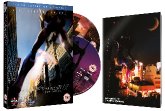
The Special Edition is a 2-disc set, with the extras delegated to disc 2.
Disc 1 autoplays with one of those 'You wouldn't parody this on the IT Crowd' anti-piracy ads. Thank God they've stopped putting them on new DVDs, but they still come as a shock when you buy a back catalogue title.
The animated menus are horrible. They are the ones where you have to wait for your intended option to come around, and then pounce on the Enter button to select it. Fortunately there are only two options, Play and Chapter Select. A moron designed the Chapter Select screen. You only know if an option is highlighted when it becomes a micro-fraction of a shade brighter than the other options. I spent five minutes hitting buttons on my remote at random, and hoping that what I wanted would happen, before I realised that I was really was navigating around the screen.
Disc 2 offers similar wait and choose options, and since there are more of them, it's twice as infuriating.
You get 34 minutes of Interviews on this disc; they are played sequentially in one big featurette, and feature many of the cast members, caught at various events as they EPK backslap about the film.
There are 12½ minutes of deleted scenes, 11 in total, but you can only see them overlaid with the director's commentary. Since you can't hear what is said in the scenes, it reduces their usefulness.
There are 12 minutes of 8mm footage, used in the film's flashback sequences, here given a director's commentary to add extra context. Since they are silent anyway, there's no problem here with losing dialogue under the commentary.
Finally there are two trailers for the film.
Conclusion
Insert disc... suffer anti-piracy ad… select play... film starts… Mankind is scum... rinse and repeat for two hours and twenty minutes... film ends... eject disc... curl up in a ball somewhere and whimper.
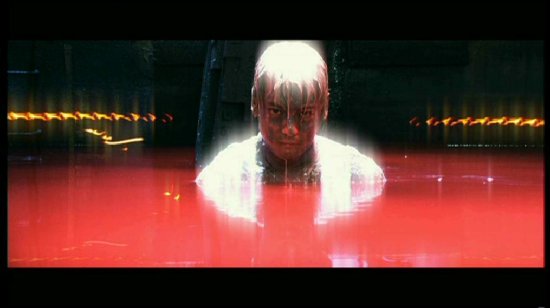
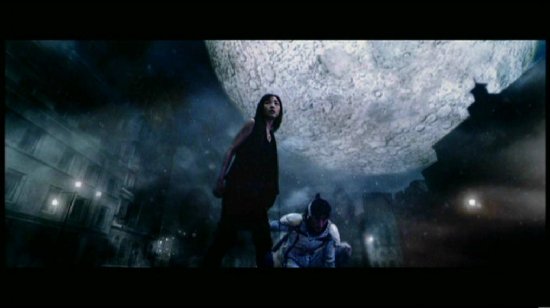
What a load of pretentious tosh! Casshern as an anti-war polemic is about as effective as an inarticulate scream. Yet that is all the movie appears to be, just one big rant about how destructive war is, and how stupid the people are who fight it. I was expecting something a little more rounded, a little more thought out, a little more entertaining. With a character like Casshern, I was expecting a superhero movie of some sorts, and while he does have an origin story that does seem to take as long as Superman's did in that iconic 1978 movie, the pay off just isn't there, with Casshern just reacting to events, and having as much personality resurrected as he did when he was a corpse.
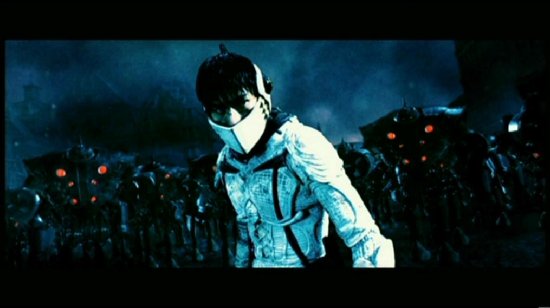
You would also think that with the endless vistas open to the filmmakers, with the limitless possibilities of the digital backlot, that the film would be a visual feast, and there are moments in this film where the creative vision is breathtaking, the imagination brought to life on screen is simply astounding. But these moments are few and far between. Instead it seemed to me as if someone had taken a master chef's ingredients, and given them to someone who didn't know one end of a wok from the other. Everything is up there on the screen, but it looks a downright mess. So often I was distracted from what was happening in the foreground, by some artfully designed background, that I probably missed a good fraction of the narrative.
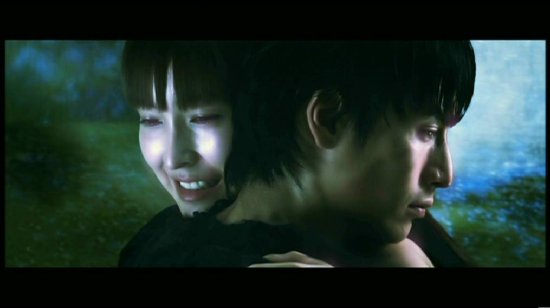
Unfortunately, the narrative isn't that strong anyway, full of continuity head-scratchers, and relying on contrivance and sheer idiotic writing to keep the momentum of the film going. This is one of those stories where events happen because the story demands, not because it naturally progresses from what has occurred, or that it makes sense with the characters. Casshern works best as an extended metaphor. If you can accept being pummelled by an antiwar allegory, bludgeoned by its single-minded message, then it will probably serve you best to put the plot and the characters from your mind, and try and appreciate the somewhat confused visual grandeur. Briefly I saw this film as a silent movie, a cross between Battleship Potemkin and Metropolis, and for that moment I was enthralled by and engrossed in the imagery. Then the characters started speaking again, and the moment was lost.
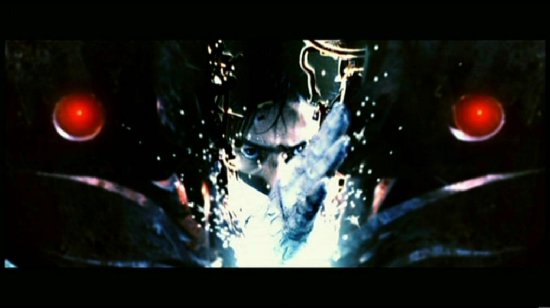
Somewhere along the way, probably around Tim Burton's Batman, someone decided that superhero movies needed to be dark, meaningful, and gritty. Which is all well and good, but for a time there, all superhero movies followed this template. Despite being a Japanese character, I think Casshern follows this closest of all. It's so dark, depressing, po-faced, full of honourable intentions, focussed on the message, that it just forgets to be fun. Even the grittiest of Hollywood superhero flicks remembers to put a smile on your face from time to time. There's none of that with Casshern. After watching this film, I've had Culture Club's War Song stuck in my head. Imagine hearing, "War war is stupid and people are stupid, And love means nothing in some strange Quarters" for two hours twenty minutes, non-stop. You know, I think I'd prefer that to watching Casshern again. If you want to watch a movie where a soldier dies, and is resurrected to become a super fighting machine… watch Universal Soldier.
Your Opinions and Comments
It was a great review though Jits (as per) ... even if I don't agree with your conclusions! I must say this is unusual as I tend to like all the anime that you recommend and tend to agree with your opinions in the majority of the films / series that I have seen.
Was it the (lack of) narrative that you least liked? Or the ponderous poetics?
Do you agree that it looked fantastic for a low budget movie?
I do agree that the film looked beautiful at times, but I also felt that the visuals were at times overwhelming. It's one reason why I think that Casshern may have worked better as an out and out silent movie. There were many things that disappointed me about the film, the singleminded focus on 'the message', the lack of narrative, the questionable continuity, the thin charactreisations, the sheer convenience of the script
SPOILER:
The neoroids winding up in an abandoned secret base full of warrior robots
But above all, what I thought was missing was a sense of fun.