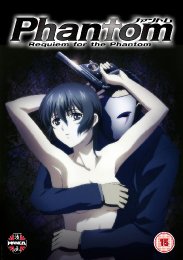















Review for Phantom: Requiem For The Phantom - Part 1
Introduction
Is it possible to dislike a series for reasons that have nothing to do with the series itself? There once was a (brief) time that Funimation's video portal streamed anime to the world freely and legally. Then they read the small print on their contracts, and suddenly the portal was geolocked to North America. At that point the UK was just a few episodes into the simulcast stream of Phantom: Requiem For The Phantom, and it was just getting interesting. That geolocking shouldn't be any reason for me to resent this show, after all this happened at the same time as Fullmetal Alchemist Brotherhood was being streamed and was similarly blocked. I certainly had no ill feelings towards that show. Hopefully watching Phantom on DVD now will reveal in stark clarity those subliminal elements that served to alienate me the first time, or prove me completely mistaken.
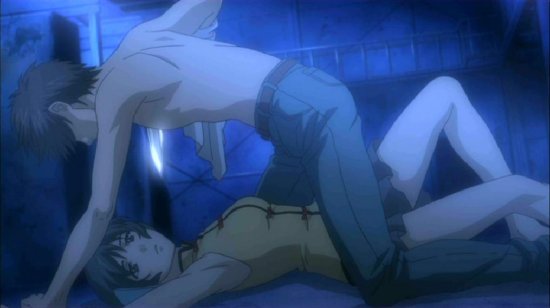
I like to think of Phantom: Requiem For The Phantom as the unofficial fourth in the Girls With Guns trilogy, comprising Noir, Madlax, and El Cazador de la Bruja. The four series were animated by studio BEE TRAIN, and Koichi Mashimo directed them all. They share common themes, their focus on assassins, with two mutually antagonistic yet sympathetic lead characters, and there's always some mind-warping element to the story, some little dark twist in the human psyche that comes across with vivid clarity when the show reveals its secrets. But Phantom: Requiem For The Phantom, based on a manga and an earlier, 3-part OVA series, as well as spinning off a videogame, commits the cardinal sin of having one of the girls with guns actually being a guy.
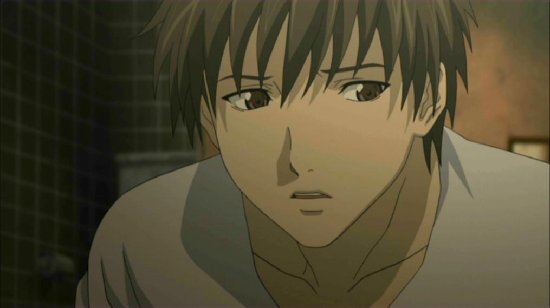
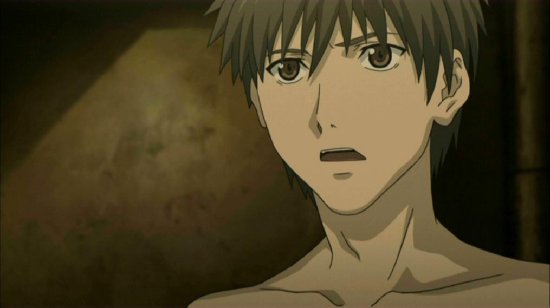
He was in the wrong place at the wrong time, witness to an assassination, and for that he should have died. But there was something in him that was of interest to Inferno, and instead he became the latest test subject for Phantom. His memory erased, his identity erased, he became Zwei, partner to Ein, both of them constructs of the Scythe Master, elegant killing machines able to kill with efficiency and without mercy. The Scythe Master created Phantom as the perfect assassination squad for Inferno, a powerful criminal organisation on a self-appointed mission to unite the criminal underworld under their leadership, and those who don't acquiesce have to be erased.
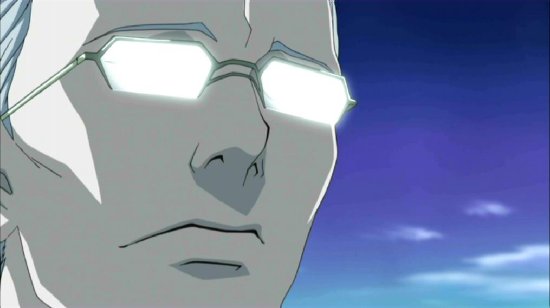
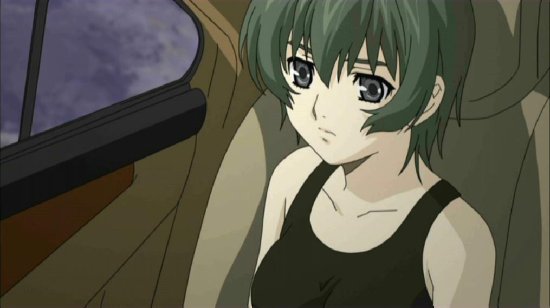
But Zwei isn't just the perfect killer. There's a part of him that aches for his past life, while he's made aware early on by one of the Inferno leaders, that he isn't just a tool of the organisation, that with ambition he can become the one wielding the power, including the power to find a way out and regain his identity. For Ein, the first creation of the Scythe Master, and the one who helped mould and create Zwei in turn, she never had that possibility, remaining completely loyal to her master. But by creating Zwei, she's created a mirror image of herself, and that has begun to reawaken her long buried humanity.
The first thirteen episodes of Phantom: Requiem For the Phantom are presented on two discs, courtesy of Manga Entertainment.
Disc 1
1. Awakening
2. Training
3. Practice
4. Assassination
5. Moment
6. Conflagration
7. The Past
Disc 2
8. Sudden Change
9. Name
10. Finale
11. Succession
12. Ghost
13. Camouflage
Picture
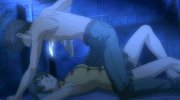
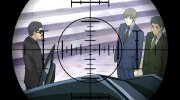
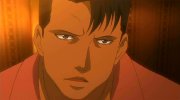
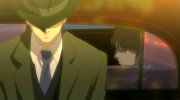
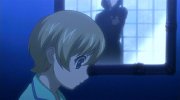
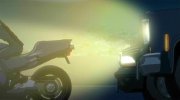
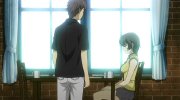
Phantom: Requiem For The Phantom gets the usual 1.78:1 anamorphic transfer on these DVDs, which courtesy of Madman Entertainment in Australia, gets a proper PAL conversion, complete with 4% PAL speedup. There are no issues with the image worth mentioning; it comes across clear and sharp, with strong colours. The light aliasing, slight colour banding, and compression noise around the most frenetic of action sequences denote the limitations of the DVD format, rather than any problems with the transfer. Coming from Studio BEE TRAIN, Phantom is an exceptionally good animation, with strong consistent character designs, a high attention to detail with the world and the props, and fluidity and energy in the animation that wouldn't be out of place in a theatrical production. If I do have a nit to pick, it's that the main character designs are a little generic, but once you see them in motion, that's easy to forgive.
Sound
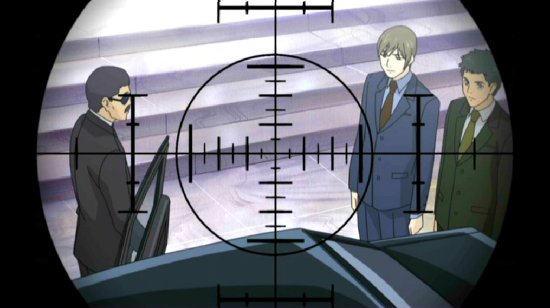
It's the, by now usual litany of soundtracks on an anime release, DD 5.1 English and DD 2.0 Stereo Japanese, with optional translated English subtitles and a signs only track. I went for the Japanese audio as always and was very happy with its actor performances and stereo action. I gave the English dub a spin, and the voice actor performances are as you would expect from Funimation, a little tempered for the more serious tone of the story, but still a typical anime dub. The 5.1 soundstage does bring out the best in the action and the music however, and if dubs are your preference, then a home cinema system is a must for this show. The music in the show is excellent, a grand and cinematic set of themes that complement the story well and really drive the tempo, set the mood. The credit themes on the other hand… the opening theme by Kokia is quirky and unexpected, but it does grow on you, and comes to symbolise the show. The end theme on the other hand is pure self-indulgence by the increasingly eccentric Ali Project (Rozen Maiden), and demands the pressing of the skip button.
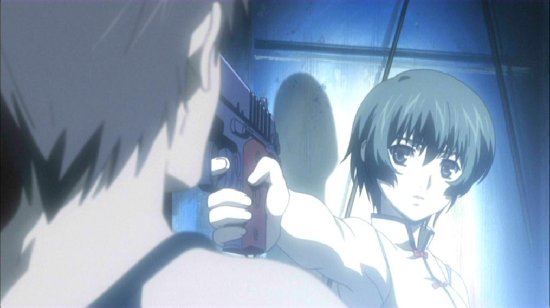
Something a little disappointing that I noticed is that Funimation's dub extends beyond simply changing the voices, and also alters the intent of the creators, albeit slightly. At the start of episode 3, 49 minutes into disc 1, there is a hand-to-hand training sequence between Ein and Zwei. In the original Japanese version, Zwei puts Ein in a headlock, and it seems he has won. The camera focuses on Ein; the sound drops away completely, the background noise, and the characters' breathing, before she turns the tables. In the English dub version, the background noise remains. I get the feeling that an overzealous sound engineer noticed a sound dropout and 'fixed' it.
Extras
The discs get static menus, and the usual jacket pictures. All the extras are on disc 2, with the ubiquitous textless credits getting NTSC-PAL conversions from Madman Entertainment, so that you can hear the credit themes at the correct pitch and tempo.
The big extras in this collection are the Picture Dramas, six of them running to a total of 33 minutes. These are comic interpretations of the Phantom universe, with the voice actors acting out mini skits that take their characters in absurd directions. These are presented as radio dramas, with static images used to indicate the scene. That's with the exception of two of the skits, which are performed instead with glove puppets. I enjoyed them greatly, and they act as a light-hearted counterpoint to the darker series. These are presented in Japanese only, with English subtitles.
Conclusion
Phantom: Requiem For The Phantom is surprisingly good on DVD, it's certainly better than the brief simulcast that I experienced, and most of that is down to watching it marathoned over a few days, rather than the weekly instalments of its original transmission. Phantom is a show about the big picture, it tells an overarching story first and foremost, and episodic elements in its storytelling are minimal. It's a drip feed of narrative as it gradually reveals its characters, carefully constructs its world, and languidly tells its story, which is much better to appreciate at a pace of your own choosing. Watching the first four or five episodes is much better to do in one sitting, getting the introduction to the story and the characters out in one go.
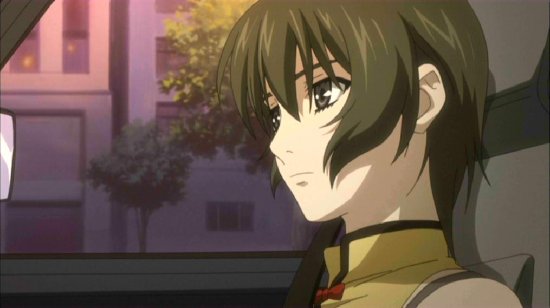
Phantom is also only superficially like Noir and Madlax, and the gender of one of the protagonists is the least of the differences. The BEE TRAIN animation is there, it's about assassins, and it may share a director, and there is also an overall similarity in tone, a more adult outlook to the storytelling, but there is a lot less mystery to Phantom. It also makes its mind warp element clear at the outset, an explicit part of the show's structure, rather than a puzzle to be revealed at the end. Scythe Master uses hypnosis and drugs to turn unlikely, and unwilling candidates into lethal assassins, erasing their memories and constructing heartless killers from what's left over. The puzzle remaining to be solved then, is that of recovering Ein and Zwei's lost memories, and Phantom doesn't even make it the most important part of the story.
Phantom comes more from the Scarface, Godfather side of the storytelling family. It's an epic crime drama, the tale of the criminal Inferno group's rise to prominence in the global underworld, told from the point of two of its most lethal weapons, the assassination team of Phantom that it uses to get rid of its opposition. It's an uneasy alliance of crime bosses. Raymond McGwire is the apparent head of Inferno, with his mutually antagonistic lieutenants Isaac Wisemel and Claudia McCunnen. Claudia's loyal bodyguard is Lizzie Garland, while Inferno has employed the services of Scythe Master to work his chemical magic and create the assassins Ein and Zwei. But this is no organisation running like clockwork. Everyone is plotting against everyone else, and everyone is in it for as much power they can grab, even the hired gun Scythe Master, who is really creating Phantom for his own twisted purposes.
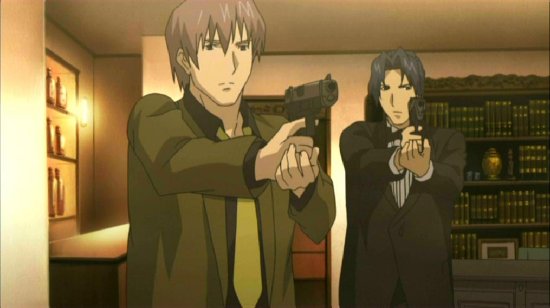
The story begins with blank slate Zwei waking up in a warehouse about to begin his training. His first lesson is simple, survive or die. Fortunately he has the instinct for survival that Ein saw in him that signalled him out as a potential assassin. The initial episodes focus more on Ein and Zwei, showing the destruction of what is left of his humanity, and the forging of a lethal killer in its stead. In Scythe Master's estimation, that means complete obedience, and we can see just how twisted he is by the way he controls his perfect puppet Ein. It's to Zwei's good fortune that he encounters Claudia early on, as she has her own plans for him, plans which require him to retain his free will. The differences in their developments begin to affect Ein as well, and that resonates down the first ten episodes.
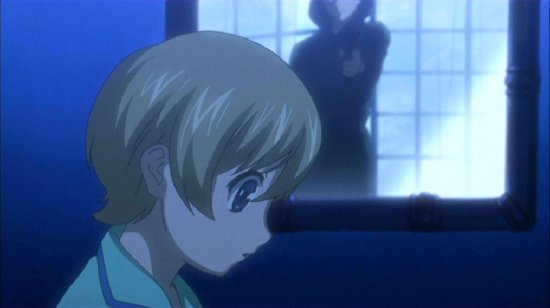
Training aside, these episodes focus on Ein and Zwei as an assassination team, watching their personal relationship develop, as does their respective skill in killing. The missions get more and more difficult, as they face down Inferno's competitors as they race to establish their presence in North America. Slowly Zwei's desire to retain his free will, his complicated need to know his past and his identity, begins to rub off on Ein, and their personal relationship deepens. This makes Ein's instilled obedience of Scythe Master more fraught with tension. When the power struggle at the top of Inferno erupts, Scythe Master's power grab conflicts with Claudia's plans, and that naturally echoes down to their respective champions, Ein and Zwei. The two assassins try initially to flee their destiny, and Zwei almost manages to help Ein recover her individuality, but events conspire against them leading to a powerful confrontation at the end of episode 10.
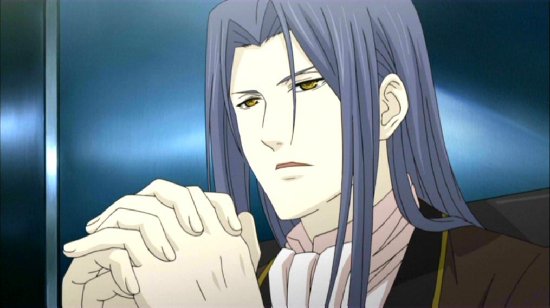
If the first third of the show was devoted to the assassination team of Ein and Zwei, and the relationship that develops between them, the next part changes direction completely. We catch up to the story several months later, with Zwei having regained his identity, now working alone as Phantom for Inferno, and also no longer a tool, but an active member of the crime syndicate. He's become a more lethal assassin than ever before, is as much Claudia's loyal sidekick as Lizzie Garland, and through his lethal talents, Inferno has pretty much established itself as the most powerful criminal organisation in the US. But the power struggles in Inferno's higher echelons continue, and once again a bloodbath results. This time an innocent bystander is killed, a young girl named Cal witnesses the murder of her sister, and five million dollars go missing. An unknown assassin is targeting Inferno deals, and it's Zwei's job to find the killer. When he encounters Cal, she latches on to Zwei in a hope of getting some vicarious revenge, but his superiors look on Zwei's relationship with the young girl with suspicion. The only way to justify the relationship is for Zwei to take Cal on as an apprentice, as a potential future Phantom. So as this collection of episodes comes to a close, Phantom enters the Leon phase of its story, with the hardened assassin teamed up with an eager young girl, the sort of relationship that reawakens a long buried humanity in the assassin, and allows for some tender mentor student bonding in the process.
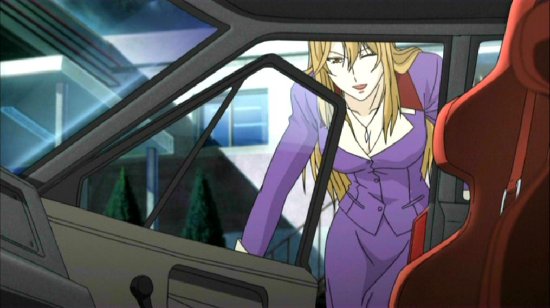
In this year of predominantly fan service heavy shows, targeted at teen male demographics, Phantom is a blessed relief. It's one of those shows that come along all too rarely, with a very adult approach. That isn't necessarily the typical definition of adult, although Phantom does have its fair share of sex, violence and swears. Phantom's adult approach is in its storytelling, in its development of character, and its refusal to pander to fan favourite clichés and quick hits of anime familiarity. It's also a show with no redeeming characters. Its hero is an assassin, who at one point is faced with killing a mother and child and who doesn't hesitate for long at that. In a tale about the criminal underworld, we aren't exactly given any easy characters to root for, although some do evoke more sympathy than others. Also, it is leisurely about developing its story, once again very much of a single piece rather than making use of its episodic format. The show takes its time developing character, focuses more on mood and style, rather than quick hits of narrative, but by eschewing the more esoteric traits of its stable mates like Noir and Madlax, Phantom is in many ways the most approachable and audience friendly of the moody assassins anime.
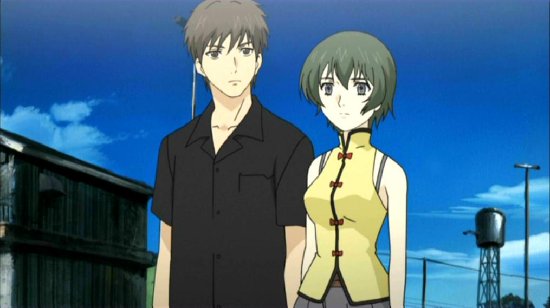
This first half of the series marks Phantom: Requiem For The Phantom as one of the smarter, more stylish, more adult oriented anime shows that have been released this year. It's a show that definitely rewards viewers who settle in for the long term when it comes to anime, and for those who want more than just the usual T & A fan service from their shows, this series is definitely worth considering. If Part 2 lives up to the standards set by Part 1, this will be a must own title.
Your Opinions and Comments
Be the first to post a comment!